September 12 (?), 2025
I can’t explain why, because since coming back to the States, I’ve only had them once, and they truly just were not the same. They lacked a hint of lime, I think, or maybe their strange, almost magical pull only worked when I was on foreign soil. Whatever the reason, during my time in Chile, I was a fiend for Blue Takis.
I must have eaten at least twenty-five bags of them. Worse, I became known for doing so, both by my housemates (for whom my very ethos, at times, boiled down to Blue Takis) and by the broader market reactions of the Chilean economy. That latter part is mainly a joke, but I do swear that Tottus, the supermarket two blocks away from my house, started stocking them for me: as the semester went on, they went from scarce to scarily abundant on the shelves.
But before they were a disturbingly large part of my abroad identity, they began as just an idea, and an elusive one at that. It was a concept that intrigued me and frightened me in equal parts.
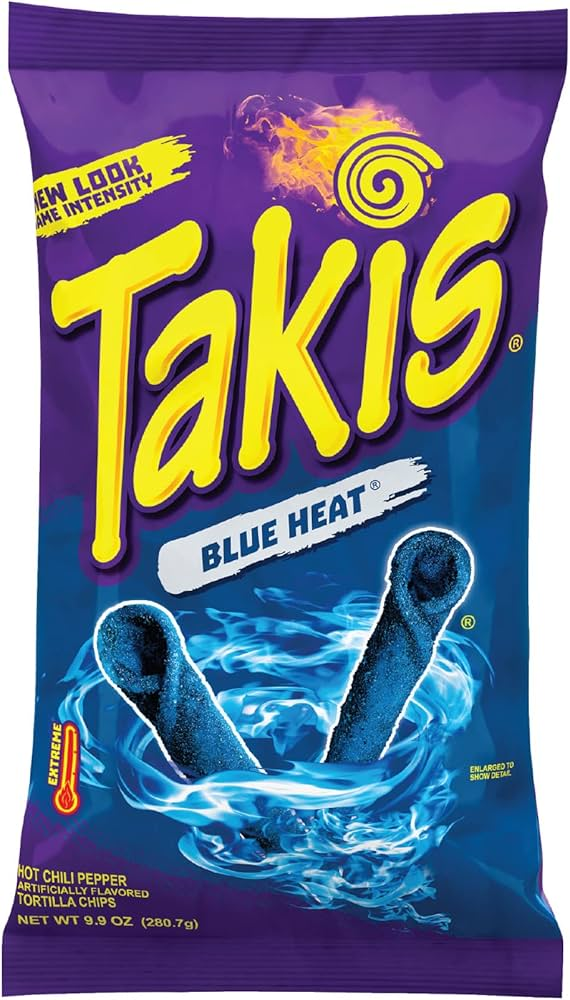
For no reason at all, the obsession began in San Pedro de Atacama. At some point on the trip, Anna and I had discussed how takis azules existed and how they must be horrible—and as soon as it was it acknowledged, it had to be proven. It was like finally verbalizing the unthinkable tension at the core of a doomed relationship; anything short of a breakup would be impossible.
Maybe that’s a bit much. Really, it was a matter of curiosity, descended from our house’s tradition of trying the most artificial snacks that Chile had to offer. Throughout the semester, Anna had insisted on the supremacy of the sabor quimico of cheese Ramitas, a Chilean stick-shaped chip (the bags were dense, too: you could never call them guilty of selling air like Lay’s). In the same vein, Dylan and I were constructing a tier list of every ice cream bar that could be bought in the frozen aisle of Tottus—the “Danky Nogatonga,” of course, being the eventual winner.
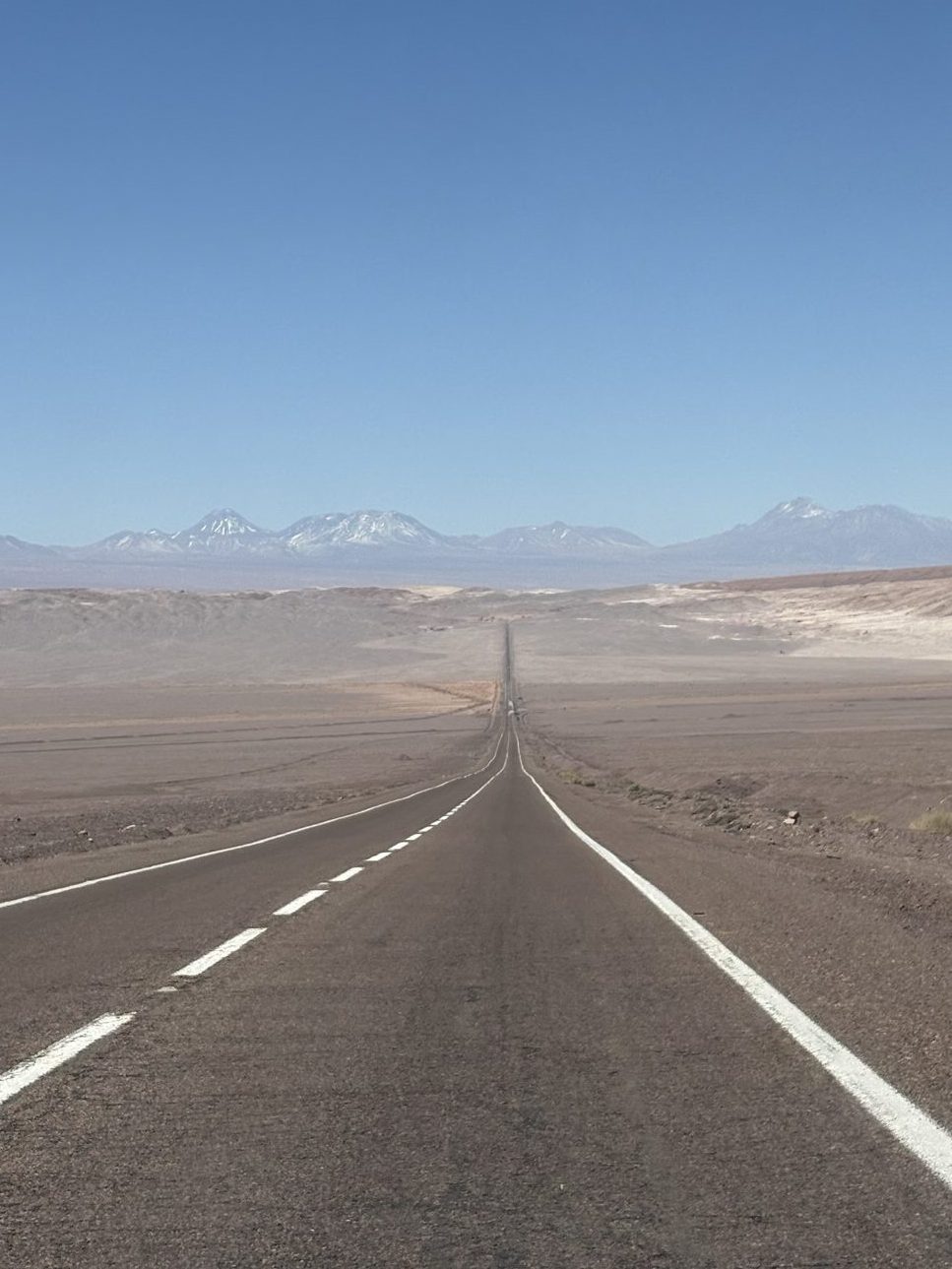
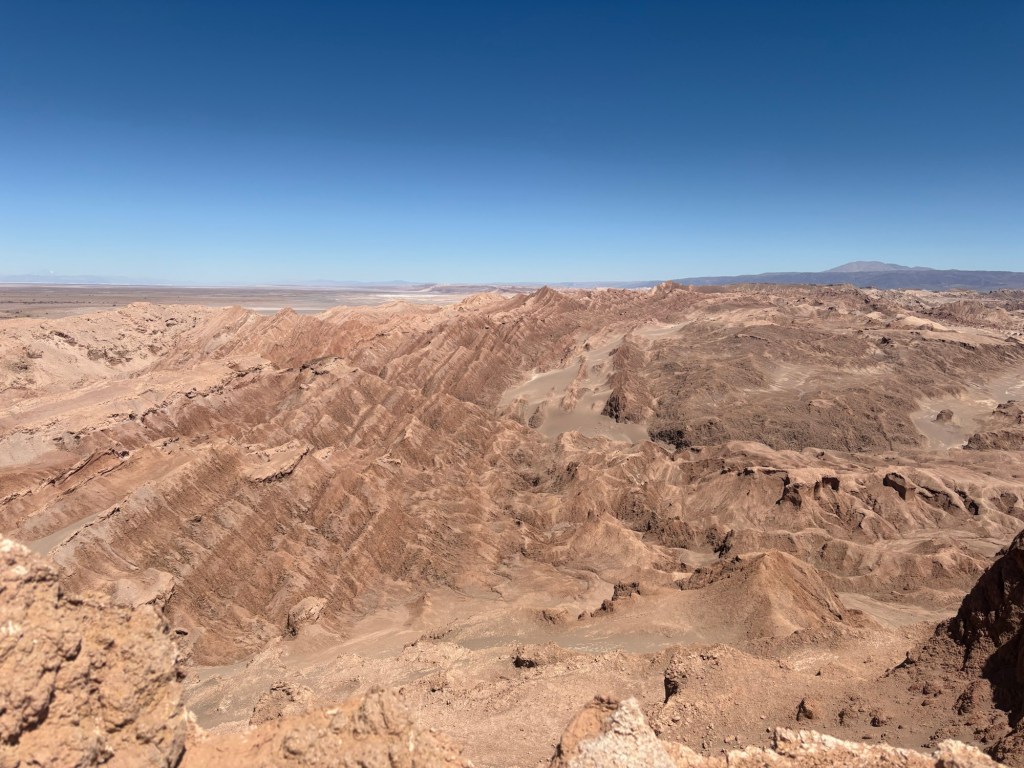
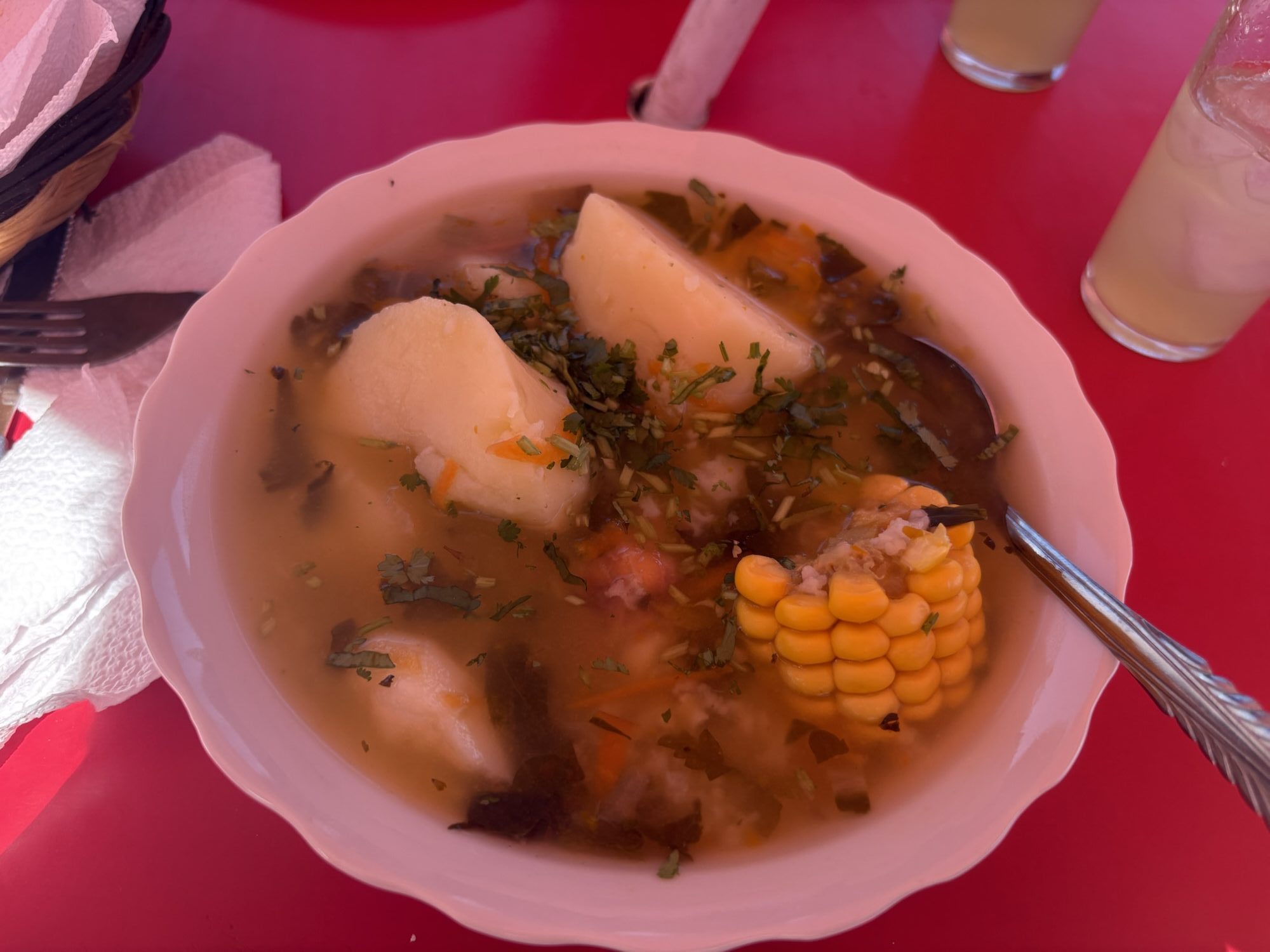
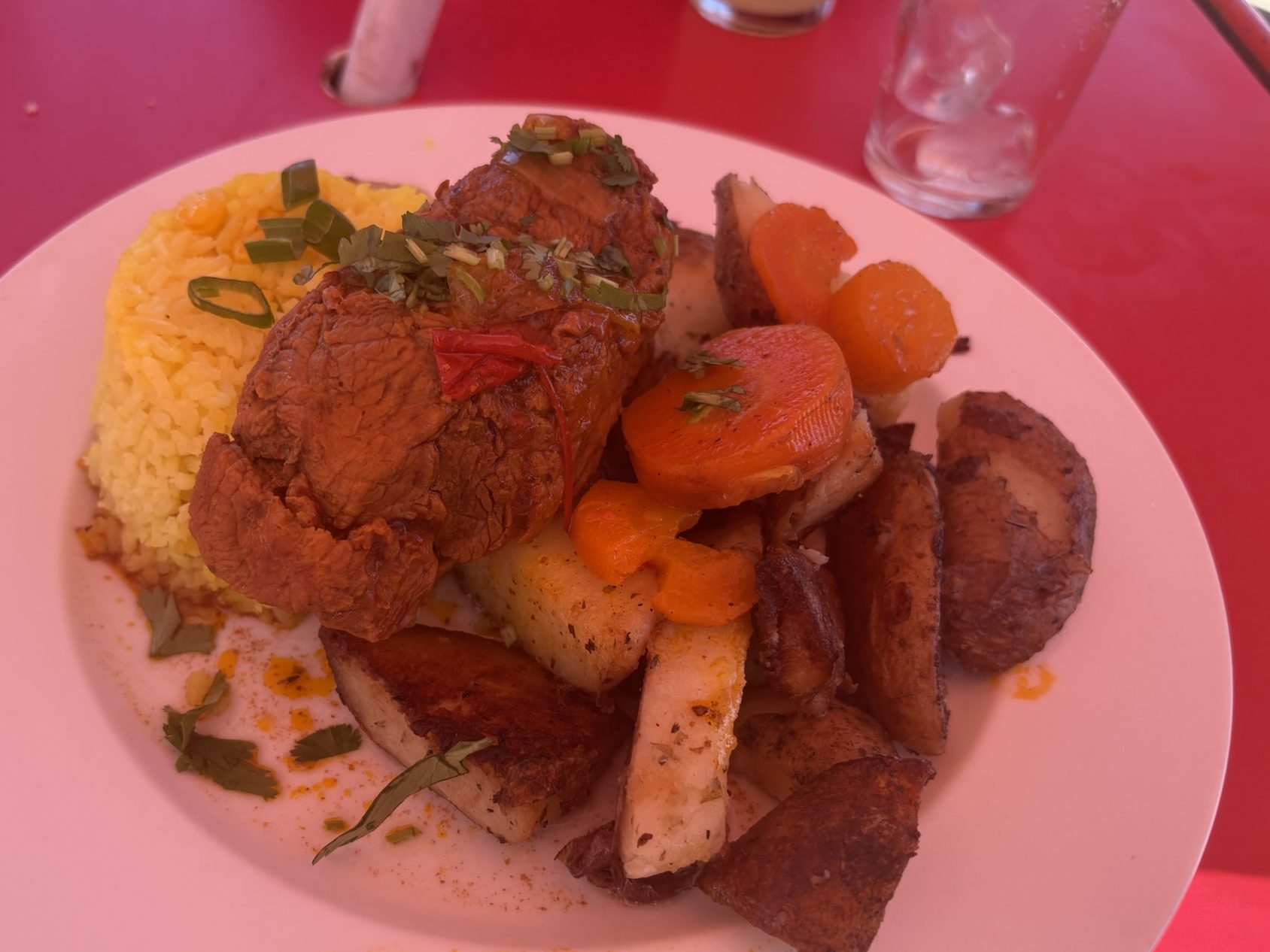
Blue Takis, while not Chilean in origin, scratched the same itch. Thus, on our second day at San Pedro, after returning a day exploring the desert beyond, I felt like it was the perfect time to start searching. We had arrived back in town in the middle of the afternoon, and after thoroughly enjoying a Menu Del Día, the only other big activity we wanted to do was a stargazing tour. Most of the group was ready to relax, but I was still possessed of that traveler’s desire to explore, so I told everybody that I would go out and book us with a guide.
With this task to take care of, not to mention some audio messages to send to friends back home, it seemed logical to fold one more loose quest—locating Blue Takis—into the mix.
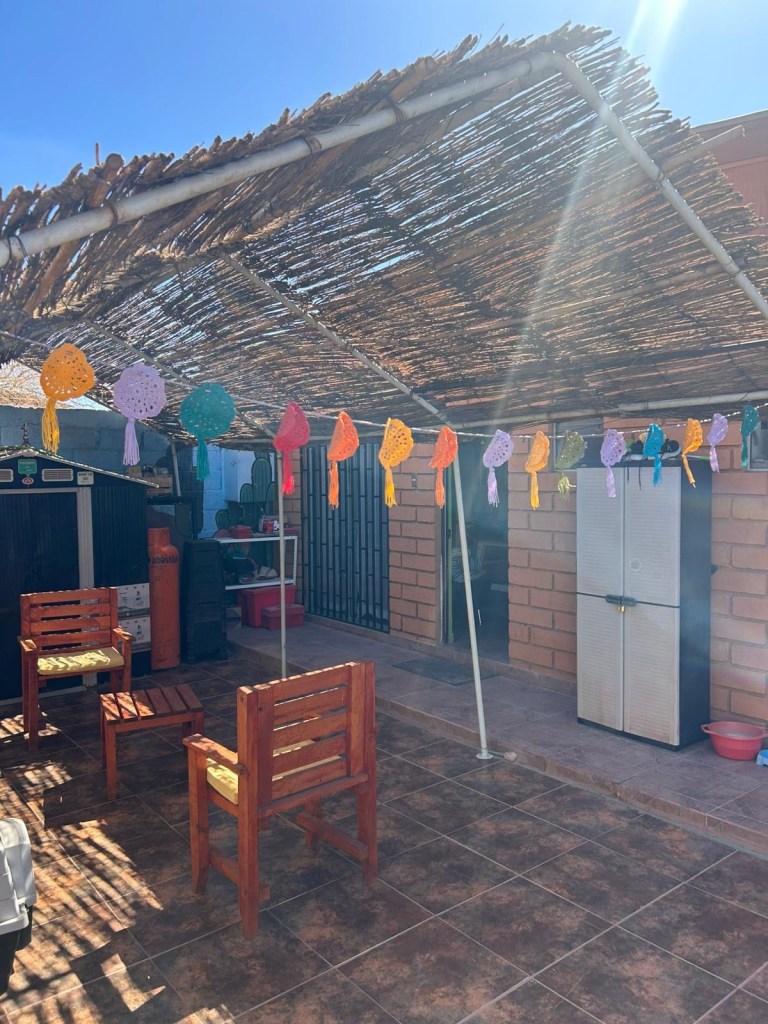
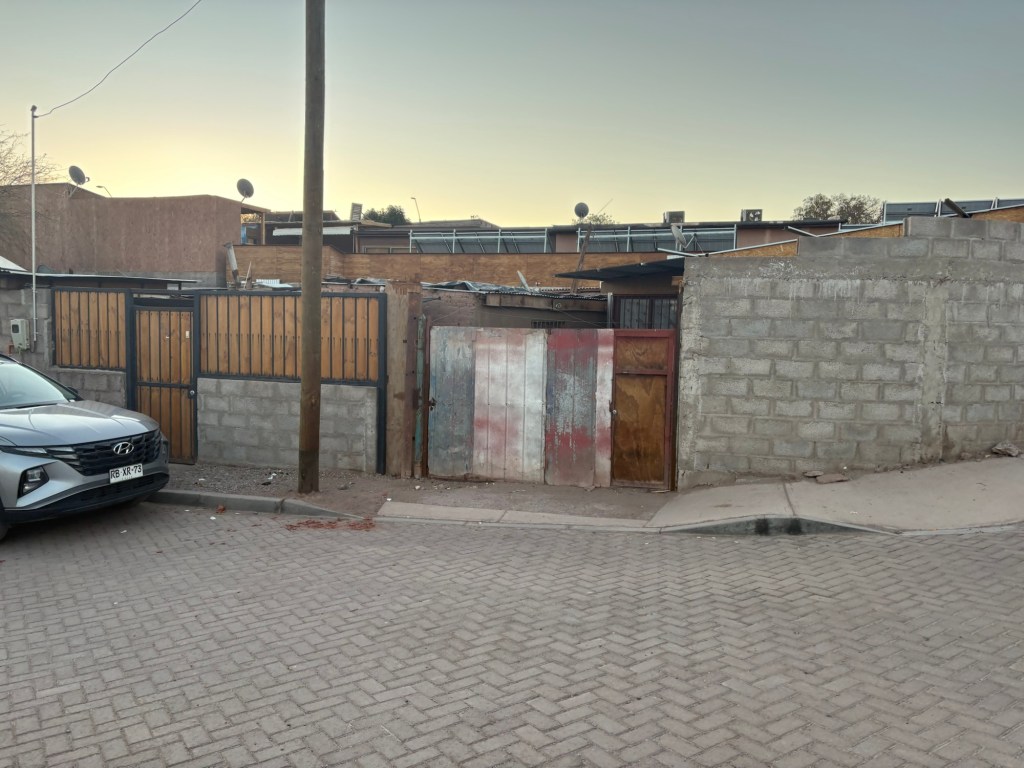
As my friends rested, I set off on my solo mission. Our Airbnb was one turn off the highway, sequestered away from the tourist sections of the town. Nestled (to use the saccharine language of vacation home realtors, or Airbnb hosts) right next to a little playground. From here, it was a few windy turns to reach the town center.
As I walked, I passed another, more deluxe playground (Chile has top-notch playground game, let me tell you). Next was the bus stop where I had tried to meet Suditi when she had arrived the night before. There had been two dogs fighting for control of a street corner here, but I never saw which had prevailed, as just then Suditi had called to let me know that she was at the front door of the Airbnb instead of at the bus stop. Because she was meeting my other friends for the first time, I had to run back home.
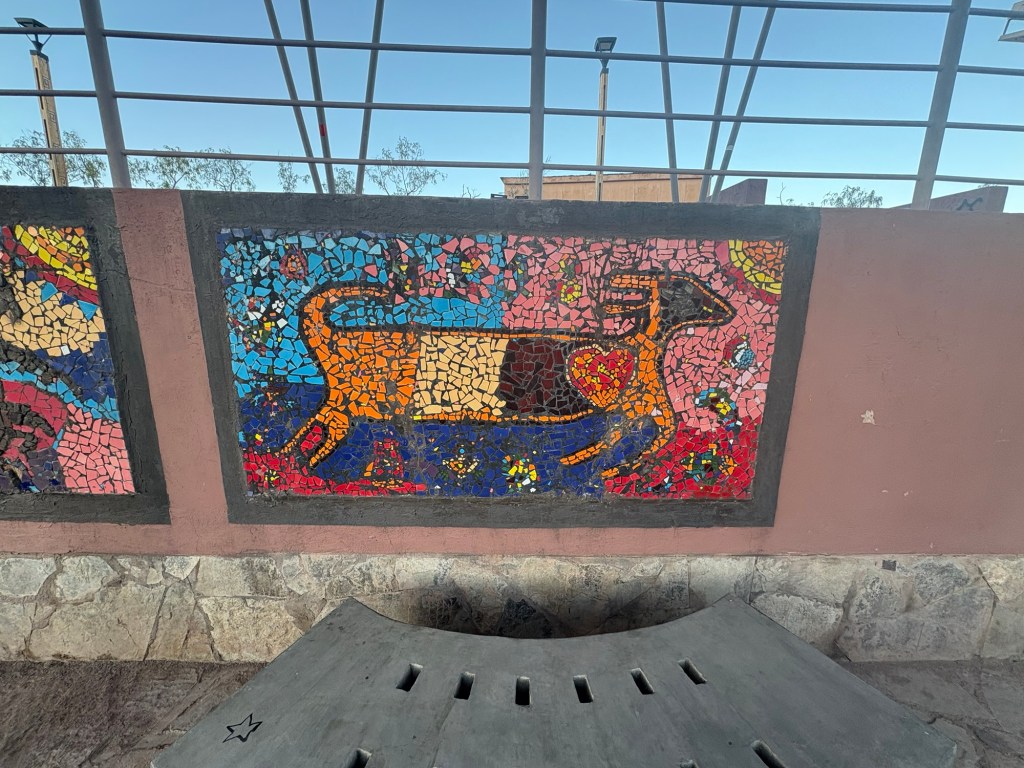
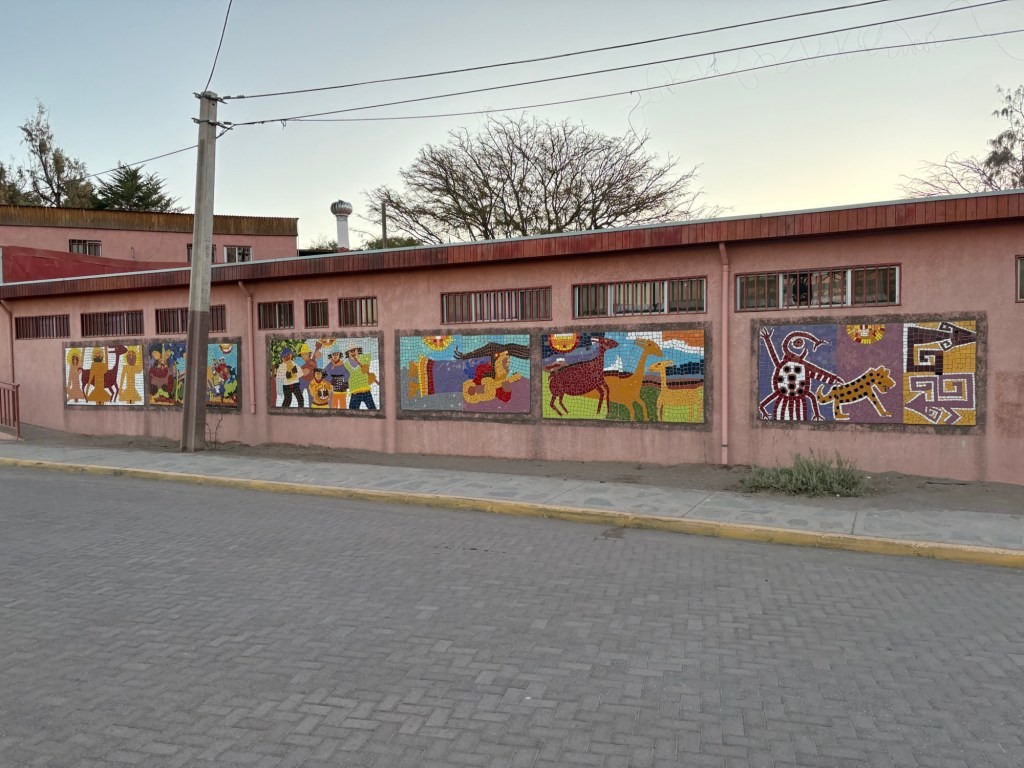
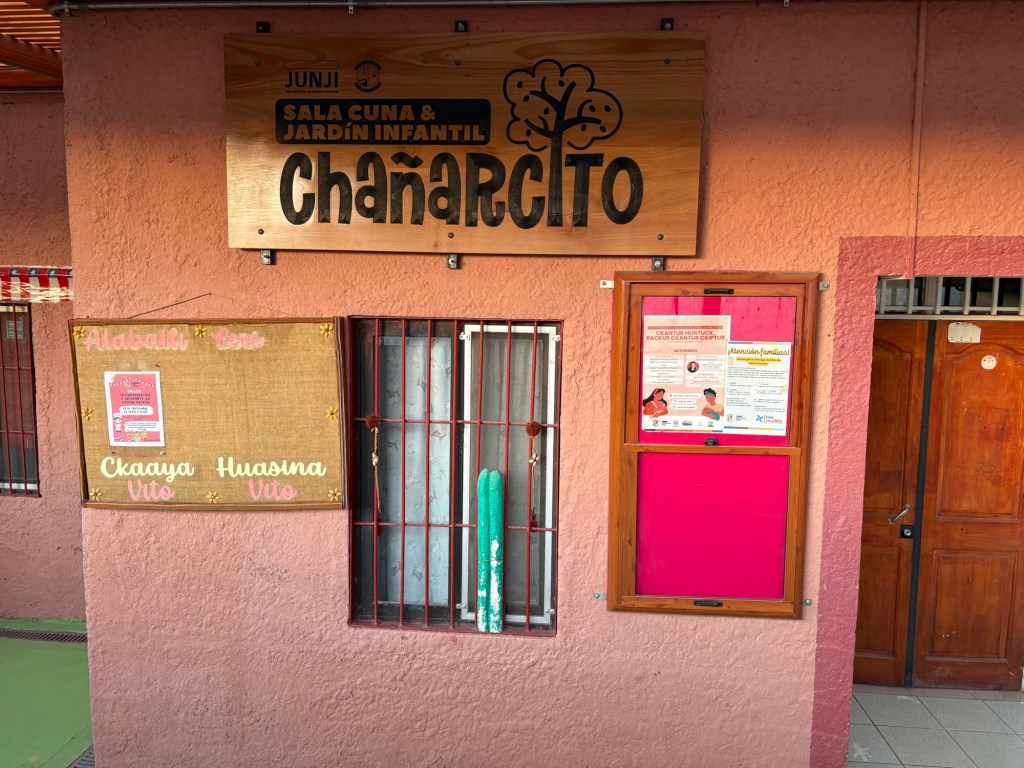
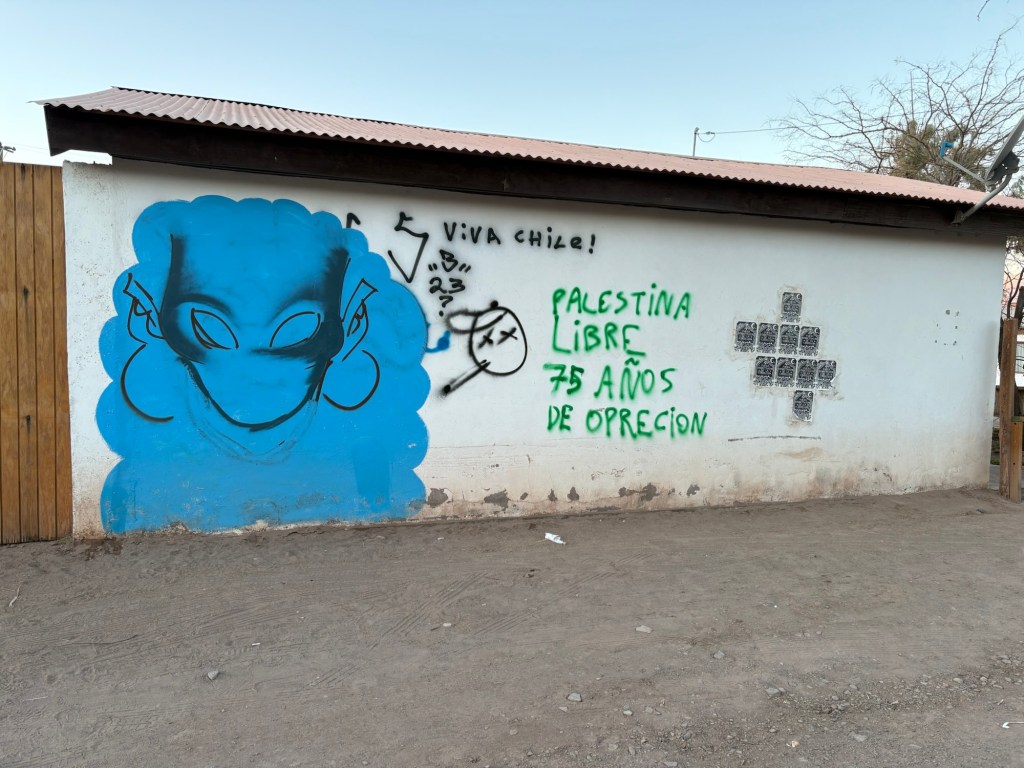
Even as I drew nearer to the town center and the more-trafficked areas, there were plenty of signs of a thriving local community distinct from the tourist economy. The graffiti and murals, which abound in Chile, were tinged with a distinct Altiplano flair. The tiny elementary school had flyers on its adobe walls written, at least partially, in an indigenous language. Just past this was some sort of cultural center/amphitheater hybrid, empty but decorated with the national colors of red, white, and blue—ready for fiestas patrias.
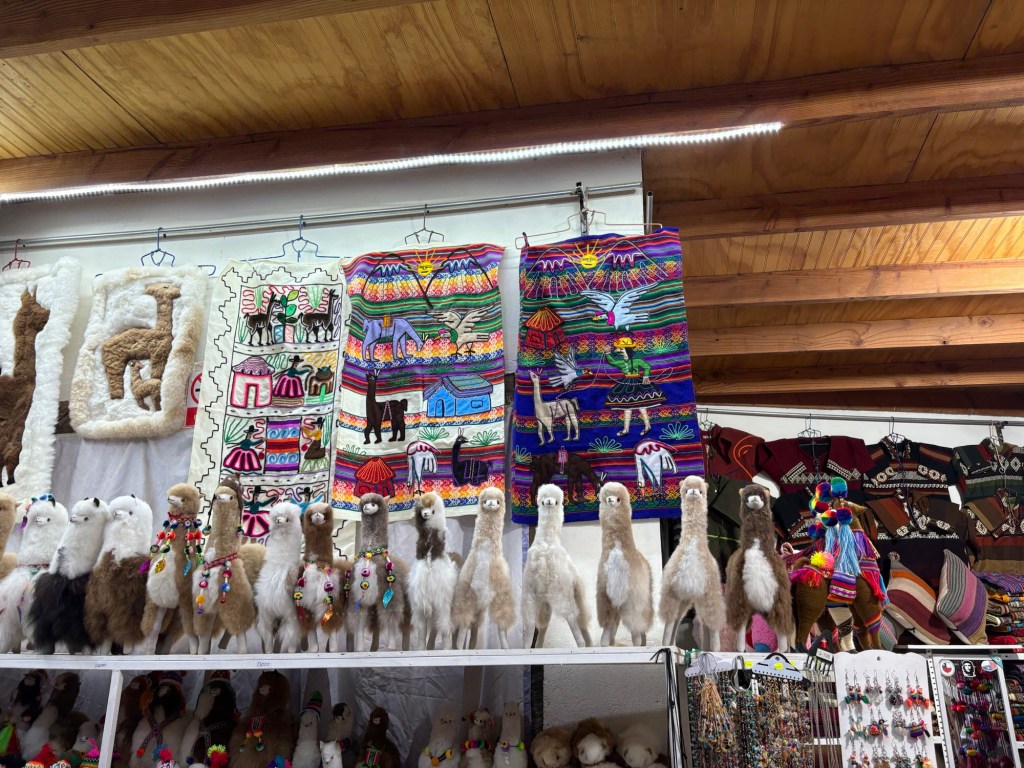
Further in, the main drag of San Pedro hummed with tourists returning from the days’ excursions, a dirt road lined with tour agencies, hostels, and bars. Especially numerous were the vendors selling their wares; every other door offered blankets of striking blue and orange hues, coats fashioned from alpaca and vicuña fur, or countless bracelets and hats and necklaces. Not to mention the plethora of fridge magnets and “San Pedro de Atacama” T-shirts.
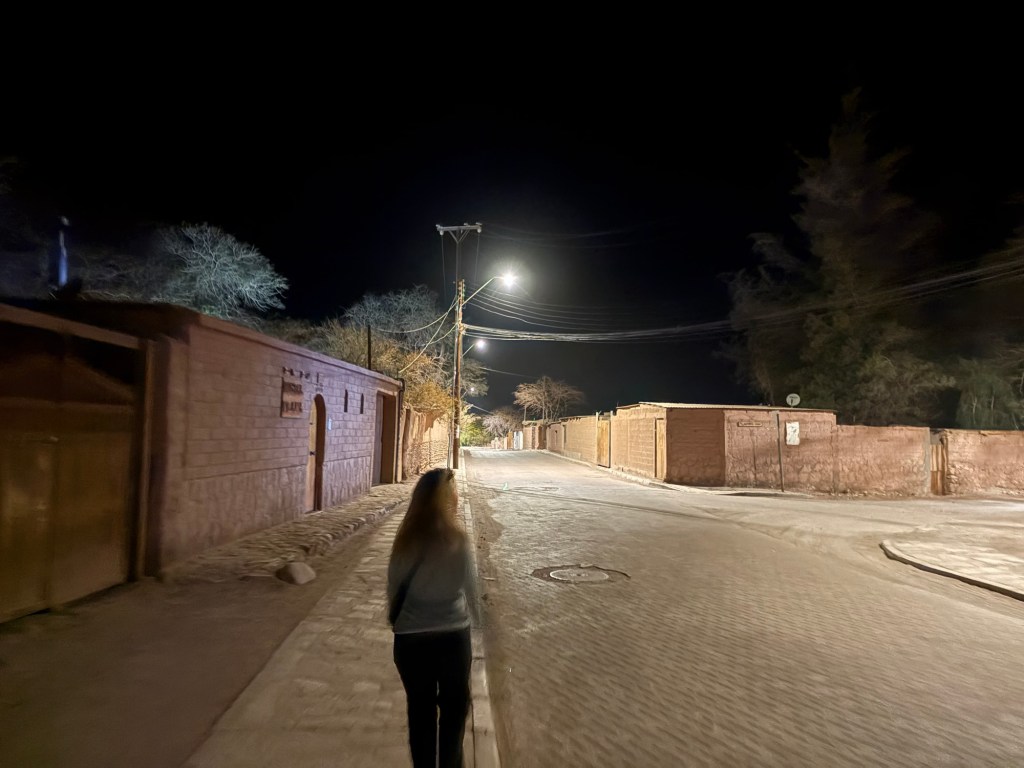
We had come the night prior, too, to explore. The Spanish word “recorrer” comes to mind, which doesn’t have a great English translation. “Travel around,” maybe; we had been taking a stroll. At some point, we had gotten completely lost, routed away from this main street. It was late, our data wasn’t working, and there wasn’t really any street lighting. With the desert architecture, it felt like we were in the back alleys of Mos Eisley, minus the scum and villainy. Instead of being scary, though, it had been fun. San Pedro wasn’t large enough to be lost in for too long, so there was no urgency, and eventually we had found the Airbnb.
I guess I’m mentioning this because on that previous night’s walk, I had listened to every single stargazing tour guide’s official pitch and acquired every single one of their flyers. Since then, I had crunched the numbers and identified the one that was the most optimal—that is, the cheapest. Their tour office was my first destination.
I can’t remember a single thing about booking the tour or about the interaction, which means that my Spanish was probably not too bad. I signed us up, got their WhatsApp for coordination purposes, and, checking the time, texted everybody that we had about two hours before they picked us up at 8pm.
It was time to transition to Phase Two of the mission: Operation Blue Takis. But before I could peel away from the thoroughfare and begin searching the minimarkets of the less-traversed streets, I was distracted by an ice cream store with a line jutting into the street, causing other pedestrians to adjust their course around it. Ice cream sounded great; was it worth waiting for?
The math got a whole lot easier when I noticed that right next to this ice cream place was another one with no line. In no time, I was savoring a double scoop of mint and lime. It made all the difference, I must say. If I ever publish a Youtube video of my “Top 5 Robert Frost Inspirational Moments,” this experience will make the cut.
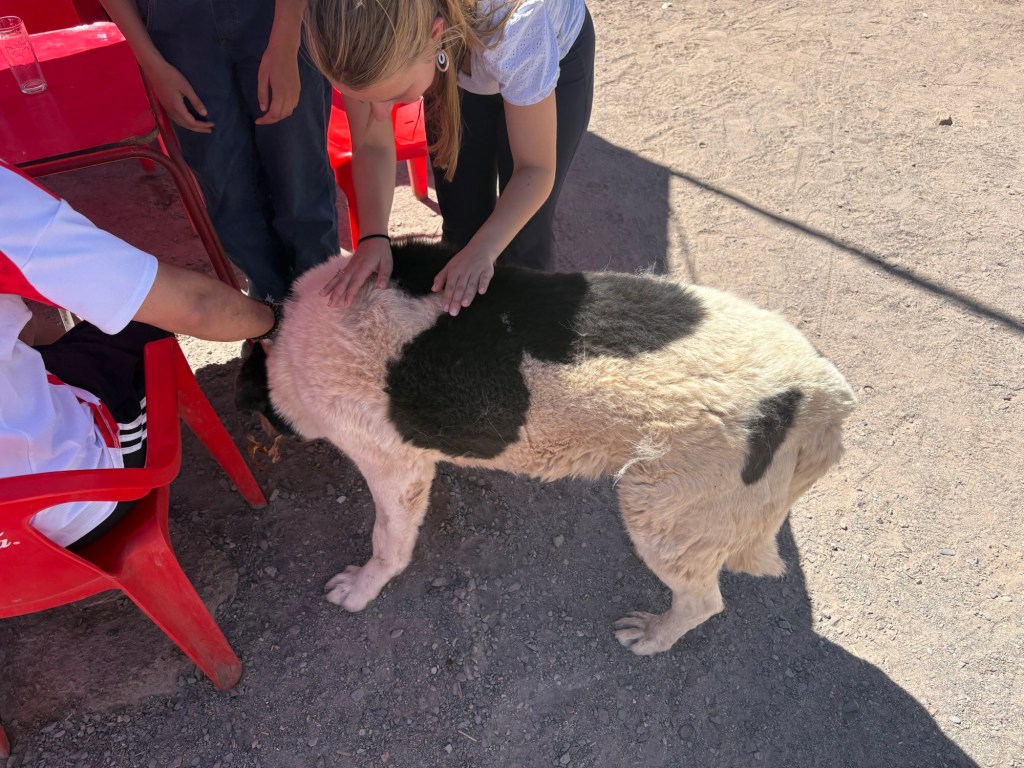
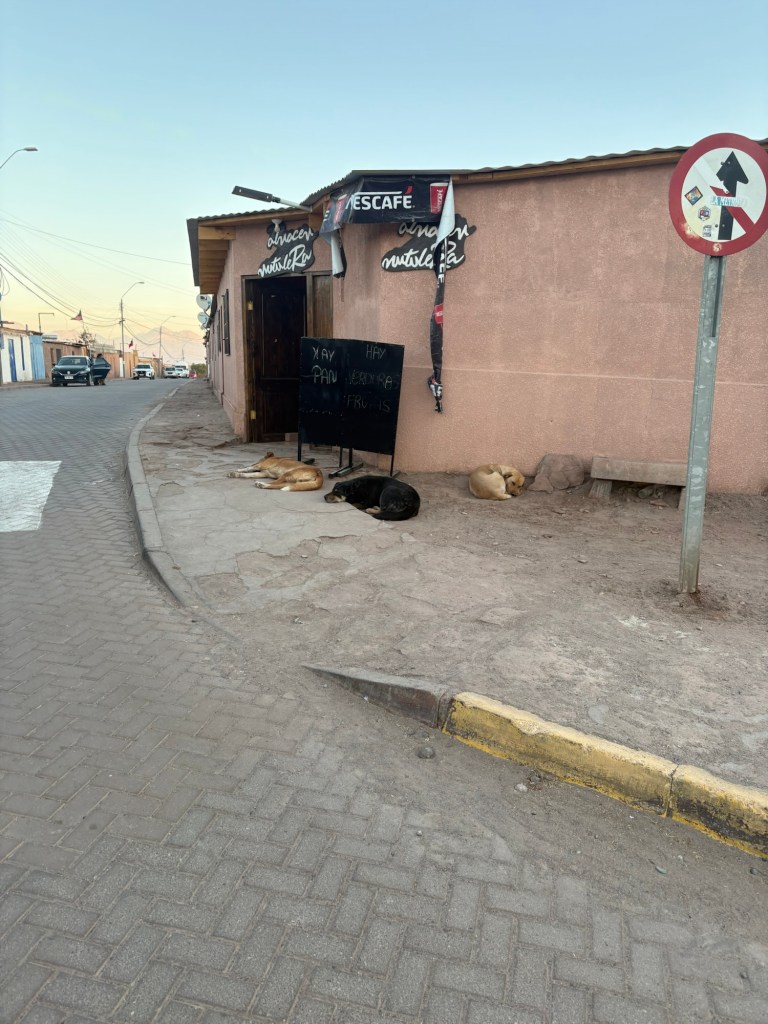
Ice cream in hand but still craving the mystery spice of the nebulous Blue Takis, I began to wander the side streets of San Pedro. As I stopped in minimarket after minimarket (Chile has top-notch “minimarkets per capita” game, let me tell you), I realized that I had stumbled upon a pretty solid formula for solo exploration. I would enter a minimarket, look for the Blue Takis, fail to find them, make conversation with the shop owner (a two-in-one of learning about the town and practicing my Spanish), pet the dogs sitting by the front door, and set off for the next one.
I think the key for this system was having a goal, even a relatively unimportant one. Aimless wandering, it turns out, is better with just a bit of aim.
Just a bit, though. The fate of your day can’t hinge on the success of the mission. If this had happened later in the semester, when my chemical dependency had built up, it might have been different. Thankfully, it wasn’t all that crucial today, which was good, because I just wasn’t having any success. I found normal Takis, Nitro Takis, Xplosive Nacho Takis, and even Guacamole Takis, but no luck with their blue cousins—which of course only increased their allure. With every failure, I began to build up anticipation for a potential breakthrough.
And then, as I rounded a corner, I heard music.
If there’s one thing I’ve learned from traveling, not necessarily in the “survival skills” sense but in the “maximizing experiences” one: when you hear music in the small town of a foreign country, you must follow it until you find the source. Although maybe I didn’t learn this, exactly, because it wasn’t a conscious decision so much as an instinct. I was a salmon being guided to a spawning point. I streamed along, passing not one but two dirt soccer fields in the process, until I ended up back at the amphitheater that I had seen earlier.
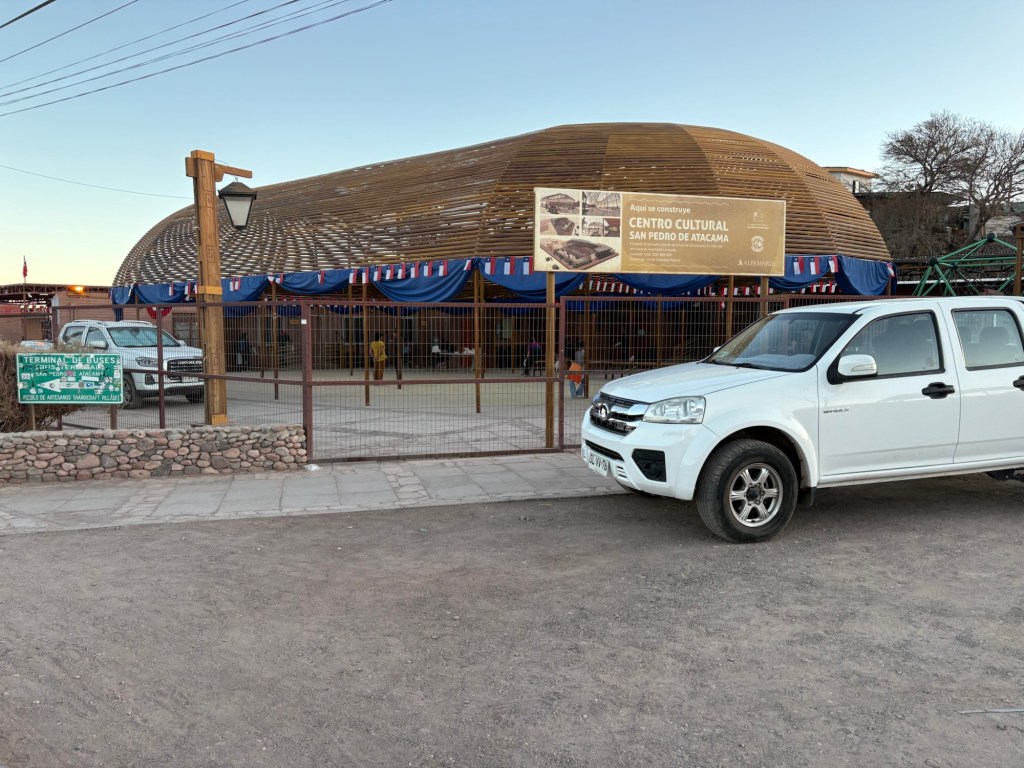
It had been previously empty, but now there were people streaming into the entrance. I made my way into a courtyard with sections of folding chairs, of which probably half were occupied. To the right, there were some oversized steps that a group of people were sitting on. There were probably fifty people in total there; I seemed to be the only extranjero. I’m sure a fair amount were domestic tourists, certainly some santiaguinos, but the majority seemed to be local families ready to support relatives who might be on stage.
I took a seat about five rows back from the front. Up on stage, there was a band playing. Specifically, a band of old people. And they were positively rocking out, playing folk music, with multiple guitars, tambourines, and an accordion. They were dressed in clothes which I assumed belonged to an indigenous tradition (Aymara, Diaguita, Atacameño being the ones most prominent in the region). “Es una pruebita, no más,” said one of the men playing guitar—they were warming up, just showing us a little vibe, nothing more.
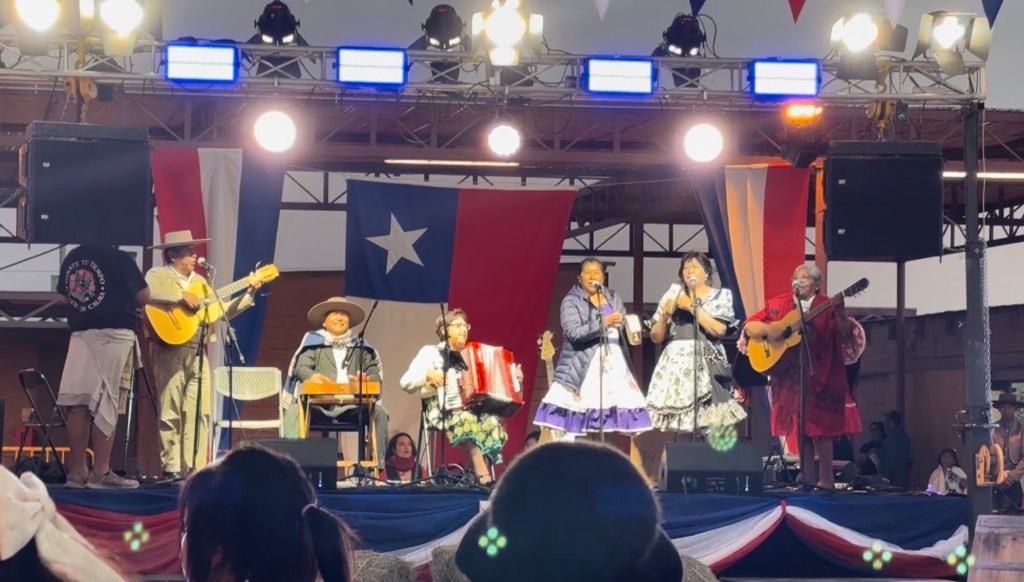
Soon they jumped into the next song, which seemed to be more structured than the previous jam. Multiple singers blended their voices into one harmony, with somebody occasionally punctuating the melody with a “tiki tiki ti” or a holler or a downright ululation. The vibe was phenomenal, and I let the music wash over me. I was (and still am, to be honest) at the point where it’s not always the easiest to passively translate songs in Spanish—I must actively tune into the lyrics—and right now, feeling the moment, instead of understanding it, just seemed more important.
I thought about texting my friends to let them know but decided I would be mildly insufferable, gatekeeping the moment that I had discovered for myself. Besides, they were busy making dinner. As a tradeoff for booking the astronomy tour, which was soon thereafter anyway, I didn’t have to help. So, while I needed to head home soon, I could just enjoy the right now.
Behind the stage was a large Chilean flag. In front of it draped semicircles of red, white and blue; spanning the courtyard were lines showcasing those same colors. The place was fully fiestas patrias-ed out. To be fair, so was just about every business, home, and public center these days. Even my climbing gym had a set of translucent holds with Chilean flags and pinwheels inside.
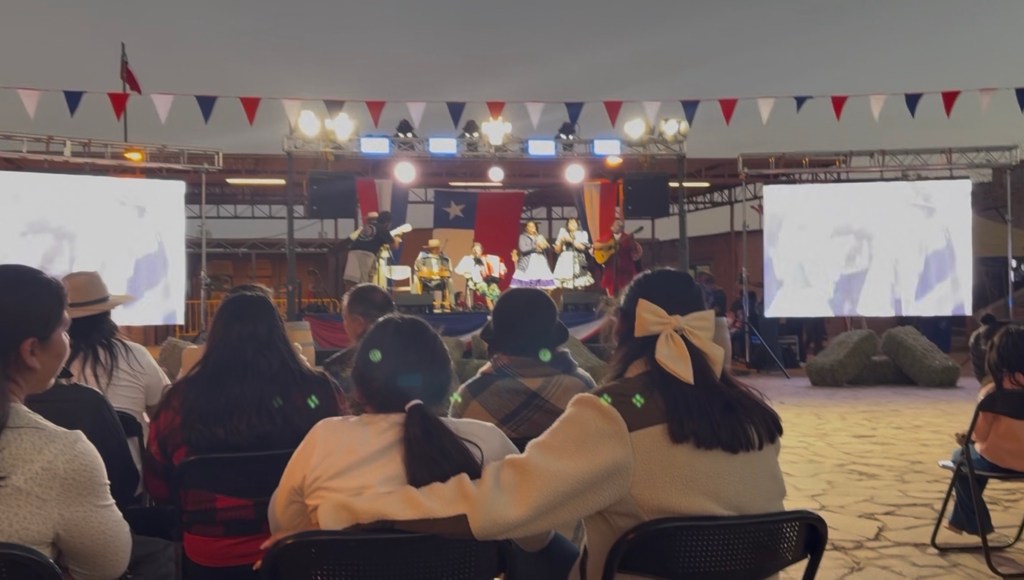
That was one thing I loved about fiestas patrias, and something that I was trying to reconcile about the Fourth of July: the flags everywhere, the rampant patriotism. As I watched the band perform amidst a sea of national imagery, my mind drifted to how something like this might look in the United States.
It was hard to get past the thought that if there were an American-themed music show in 2026, besides that fact that it would probably be intentionally divisive, it would also just be, well, cringe. Hello, the TurningPoint USA Super Bowl halftime show.
But why?
Well, Chile seemed to be quite good—better than us, anyway—at separating the celebration of the country from the celebration of all that baggage that comes with it. This is something that I think we on the left in the United States tend to be more hesitant about (and something that those on the right tend to care less about).
Granted, we occupy a completely different geopolitical position. We’ve committed imperialist atrocities around the globe, and domestically, the flag has been co-opted at times to stand for things contrary to what it should, like fear, like the hegemony of a white settler-colonial state.
But Chile doesn’t have the rosiest past (or present) either, which the average citizen seemed ready to acknowledge. To be honest, being critical of the state in Chile seemed to permeate the collective social consciousness with an institutionalized depth that we in the U.S. haven’t reached. There are the various exhibits commemorating the horrors of the Pinochet regime, the “¿Donde está Julia Chunil?” graffiti questioning the disappearance of a Mapuche activist that is nearly as widespread as the flag itself, and of course, right before fiestas patrias is September 11, a national day of protest.
Furthermore, Chilean leftism is relevant and organized on a scale that would terrify us, or at least terrify the corporate forces that have influenced us to be so wary of anything left of center. The runner-up in the presidential election, Jeannette Jara, was from the Communist Party.
But those millions of Jara voters, from what I can tell, celebrate fiestas patrias on a level that I’ve haven’t really seen at any Fourth of July function. A large part of that, of course, is celebrating family and friends being together, but the national identity is the impetus for it all. And it doesn’t change the fact that the average person on the left celebrating the Fourth might be, for any number of reasons, more reluctant to go all “rah rah USA” than the average left-leaning Chilean would be for Chile during fiestas patrias.
Keep in mind these are the observations and generalizations of a foreigner in Chile, so consider this a “vibes-based” analysis. Analysis is a strong word, even; this is a mildly revised write-up of where my mind happened to go as I watched a woman in her sixties shred on the accordion.
Expanding it beyond ideology, we’re simply a different nation than Chile. We’re so geographically massive and so powerful that we often don’t think beyond our borders when we conceptualize the world, except when we’re talking about a trade war, or an immigrant invasion, or the latest country we’ve bombed. American exceptionalism is so ingrained in our collective psyches that sometimes our reality starts and ends at the United States.
Weirdly, I feel like that (and again, the imperialism might play a role) makes it harder, at times, to identify as an American on a level that you feel. Perhaps defining your country as it stands in relation to other nations is instrumental in tethering national pride to personal identity.
Furthermore, we’re much more heterogenous and immigrant-descended. Not that Chile is entirely homogenous, with indigenous, Venezuelan, Haitian, Arab, and other identities contained within it, but in the U.S. there are a higher percentage of people who might resonate with a different national identity. In Providence, where I’m from, Dominican, Guatemalan, Italian, Cambodian, and many more would come first.
And culturally, in some ways we’re more fractured. In Chile, fiestas patrias features the cueca, a national dance with a traditional structure and set of rules. Everybody drinks terremotos, a concoction of pipeño wine, pineapple ice cream, and grenadine, so named because they get you drunk enough to feel like the ground is shaking (terremoto means earthquake). And in cities and villages of all sizes, people gather at fondas, showcases of food and dance and games.
We have, uh… “Party In The USA,” by Miley Cyrus.
Okay, don’t get me wrong, fireworks and burgers and beer are pretty great. And I always liked going to the Bristol Fourth of July parade (the oldest in the country!) as a kid. But the scale of revelry is completely different.
It also makes me think of how Chile and just about every other nation in the world sings songs at their sporting events on both the national and club level. Meanwhile, we have “U-S-A!” and “De-fense!” The only thing we do that even comes close are the marching bands at college football games.
These thoughts continued as the band finished, and the next act came on stage. Up to perform was a large dance unit composed of schoolboys and schoolgirls of all ages. The boys were wearing white pants and button-downs, while the girls were resplendent in Chilean flag skirts. Just before their performance began, everybody stood up for the national anthem. As it played, people sang along, and it seemed to me like people felt the emotions of it in a way we just wouldn’t. Again, as a mere observer, this might not be true.
But I couldn’t help and wonder: why did national identity seem so unifying here, and so divisive back home?
I’d rather pose that question and let it sit than meaningfully address it—perhaps it wasn’t even fair or accurate to begin with. An answer to any part of it could be a thesis-level project, anyway, which requires a level of research that I just don’t have the patience for right now.
Now I’m sounding like a true American. Maybe the real national identity is just the critical thinking we weren’t willing to do along the way.
Anyway, the sun was setting, and it was time for me to head back. As the national anthem finished, I slipped out of the now-crowded amphitheater and continued walking. My mind drifted away from flags and nations and back to acquiring Blue Takis. Alas, there wasn’t enough time. The van would be picking us up for the tour in twenty minutes.
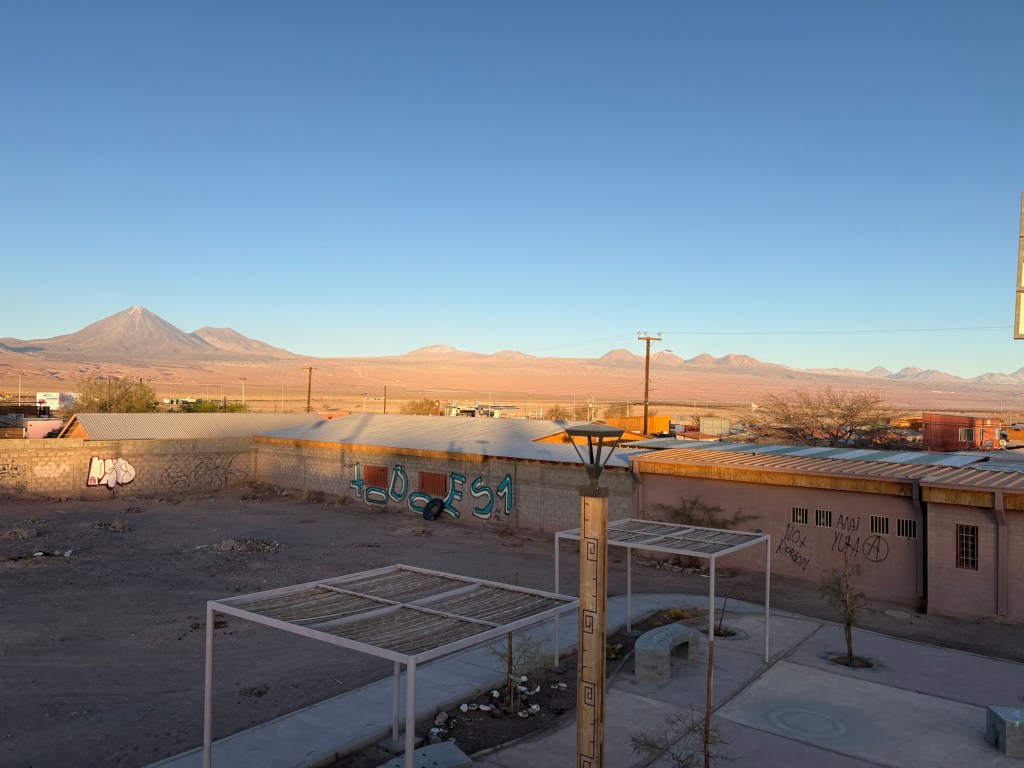
I turned onto our street, satisfied with my solo adventure and where it had brought me, physically and mentally. Now it was time for dinner and for stargazing—the next blog post, stay tuned!
As it turns out, the minimarket closest to our house, one that I had overlooked in my search, had Blue Takis. I found out two days later and finally bought my first bag. The first bites were cautious. But just a day later, I was crushing the remnants of the bag into crumbs and using it as seasoning on my breakfast scramble.
From there, I’m afraid to admit, they became almost as large a part of my identity in Chile as being from the United States. Both of them were equally complex to be proud of.